Google Playground Turns Your Ideas Into Games With AI — No Coding Needed
Google Labs' new Playground lets you describe a game in plain words and play it in seconds. Here's how it works, what it can do, and why it matters.

Imagine you have a game idea that's been living in your head for years. Maybe it's a racing game with ridiculous physics, or a trivia game about your favourite anime. Until now, turning that idea into something playable meant months of learning to code — or paying someone who already knows how.
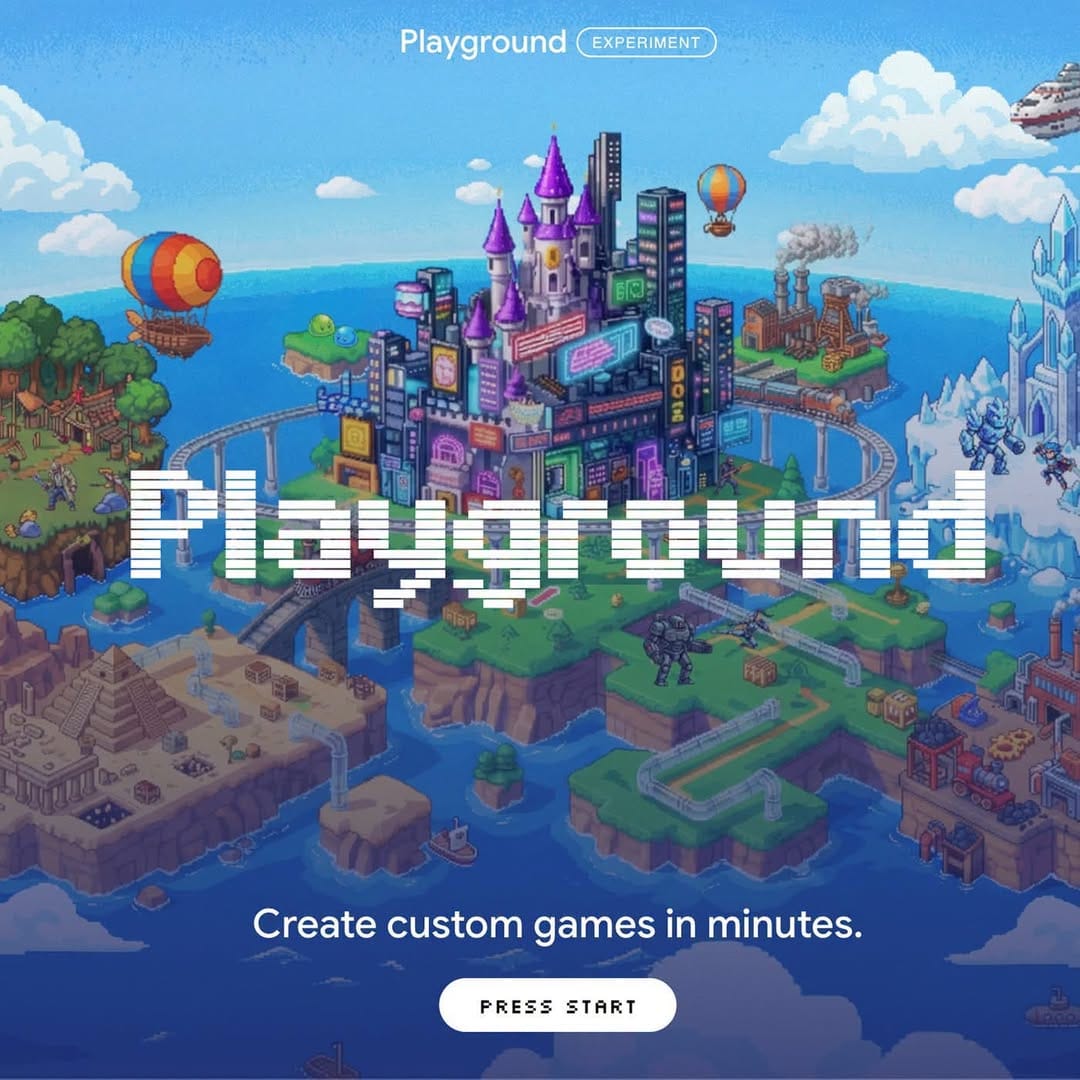
Google wants to change that. Its experimental lab, Google Labs, has launched Playground: a platform where you describe a game in plain words and AI turns it into something you can actually play, right in your browser.
What is Google Playground?
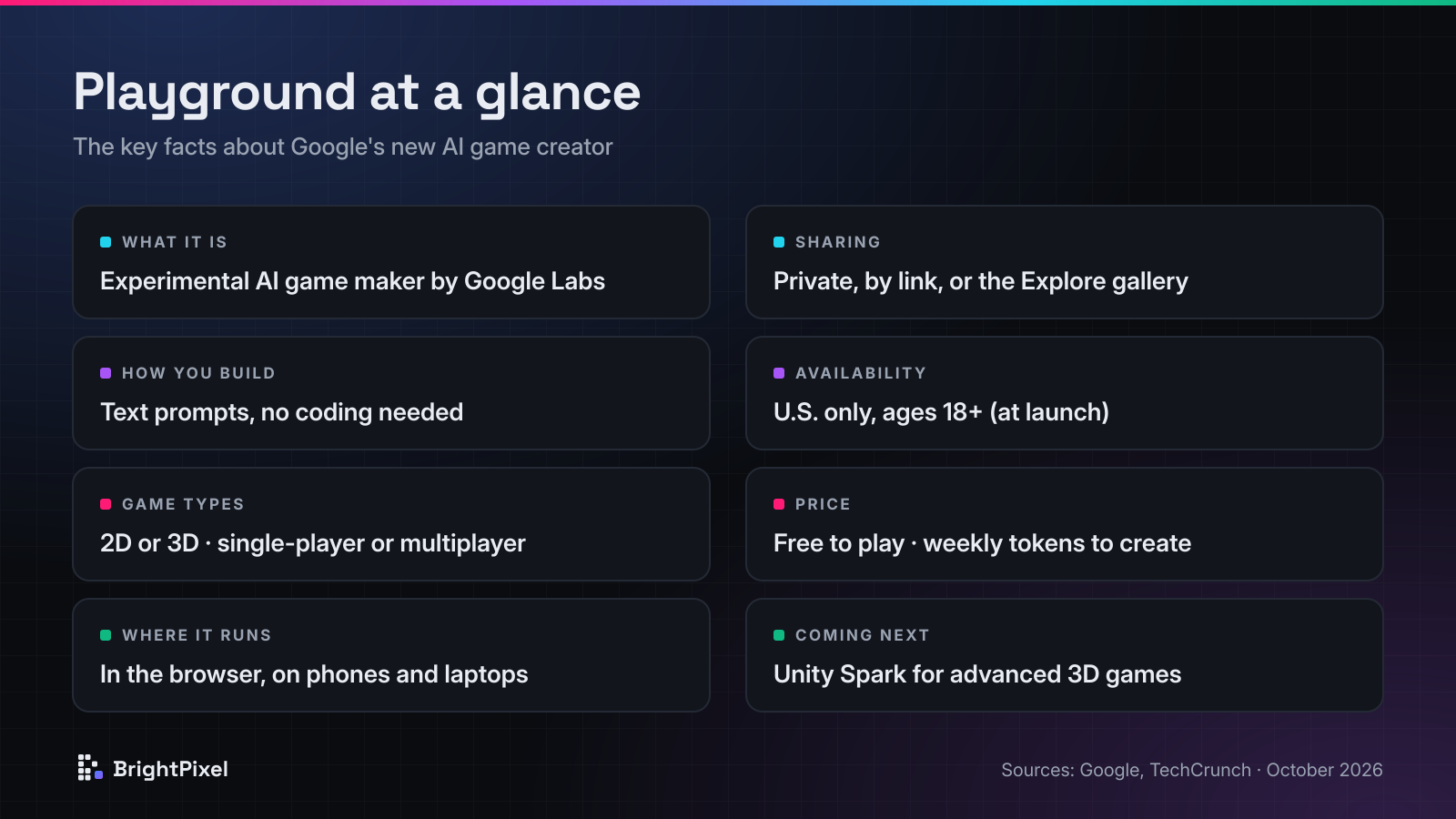
Playground is a browser-based platform for creating, playing and sharing custom games — without writing a single line of code. Instead of a game engine full of menus and scripts, you get a conversation: you tell the AI what you want, it builds it, and you keep refining it by asking for changes.
It isn't a toy-only demo, either. Google has built a whole ecosystem around it, including a public gallery of games, leaderboards and creator profiles — signs that Google sees Playground as a place for people to make games and also to play what others make.
How it works
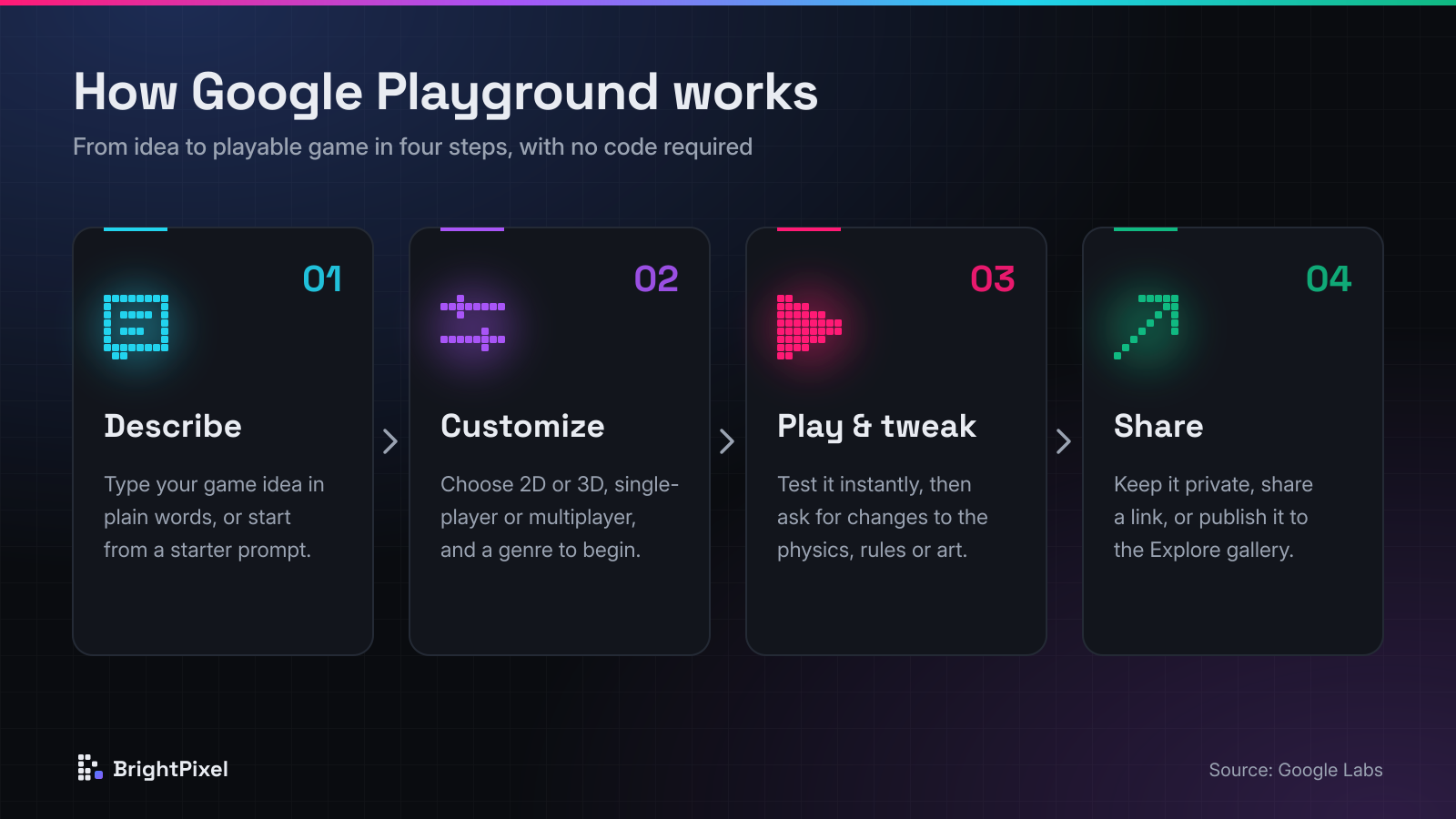
- Describe your idea. Start from a blank canvas, remix one of the starter prompts, or use guided help to shape your concept.
- Set the basics. According to TechCrunch, you can pick a genre such as racing or trivia, choose 2D or 3D, and decide between single-player and multiplayer.
- Play and tweak. Test your game straight away. Don't like how high the character jumps? Just ask. You can change physics, rules, characters and environments through conversation.
- Share it. Keep the game private, send it to friends with a link, or publish it to the public Explore gallery.
Key features
- Conversational game design. Every change is a prompt. "Make the enemies faster," "add a timer," or "switch to a space theme" — no menus or code required.
- Bring your own art. You can upload your own images, and the AI turns them into game assets that match your game's art style.
- Plays everywhere. Games run in the browser, so they work on phones and laptops with nothing to install.
- Leaderboards and multiplayer. Published games can include in-game leaderboards, and multiplayer is available in select genres.
- A real community layer. With a Play Games profile you can claim a custom handle, like games, compete on leaderboards and follow your favourite creators. The Explore gallery uses player ratings and activity to highlight the best games.
- Keep improving after launch. Creators can continue editing a game after publishing it.
- Safety checks. Every published game is screened against Google's Community Guidelines, and players can report problems.
Availability and pricing
For now, Playground is available only to users in the United States aged 18 and over. Google says it plans to expand to more countries but hasn't shared a timeline.
Playing games is free. Creating them runs on a weekly token system: the free tier gets a limited number of tokens, and Google One AI subscribers get higher usage limits. Google hasn't published exact token amounts, and access to creation is rolling out gradually depending on your Google AI subscription.
What's next: Unity Spark
Playground is built for quick, fun creations — but Google is also preparing something for more ambitious creators. Through a partnership with Unity, Unity Spark will bring professional-level game mechanics, high-fidelity 3D and the Unity runtime to the same prompt-based idea. It's currently in testing, with a closed beta "coming soon." Pricing and a release date haven't been announced.
Why this matters
What makes Playground interesting isn't simply that AI can make a game. It's that it could open game creation to a lot of people who were locked out — not because they lacked ideas, but because they lacked programming skills, or the time and money that development usually requires.
Think about who that includes: teachers who want to turn a lesson into a game, artists who want to bring their characters to life, kids-at-heart with a notebook full of ideas, and indie developers who simply want to test a concept in an afternoon before committing months to it.
Google isn't alone here, either. Roblox launched a similar natural-language creation feature, called Build, in July. The direction across the industry is clear: describing a game is becoming a real way to make one.
The reality check
Let's be honest: there's still a big gap between a fun experiment and a complete game you could release and compete with. A few things to keep in mind:
- Prototypes, not blockbusters. AI can get you to "playable" quickly, but polish, balance and great level design still take human effort and taste.
- Limited access. U.S.-only availability and token limits mean many people can't try it properly yet.
- A debated technology. Generative AI remains controversial in gaming, with ongoing concerns about originality and the quality of AI-made content.
Still, the direction itself deserves attention. Even if the first wave of Playground games is simple, tools like this tend to improve quickly.
Final thoughts
Playground won't replace game studios any time soon. But it might change who gets to make games in the first place. If anyone can turn an idea into something playable in minutes, the most valuable skill may no longer be knowing how to code — it may be knowing what's worth making.
So here's the real question: are we entering an era where ideas and creativity matter more than programming skills? Tell us what you think — and what game you'd build first.
Sources: Google — Introducing Playground, TechCrunch. Cover image: Google.