What Are AI Agents? A Simple Guide for Beginners
AI agents don't just answer questions — they take actions to complete tasks. Here's a plain-English guide to what they are, how they work and where they're useful.

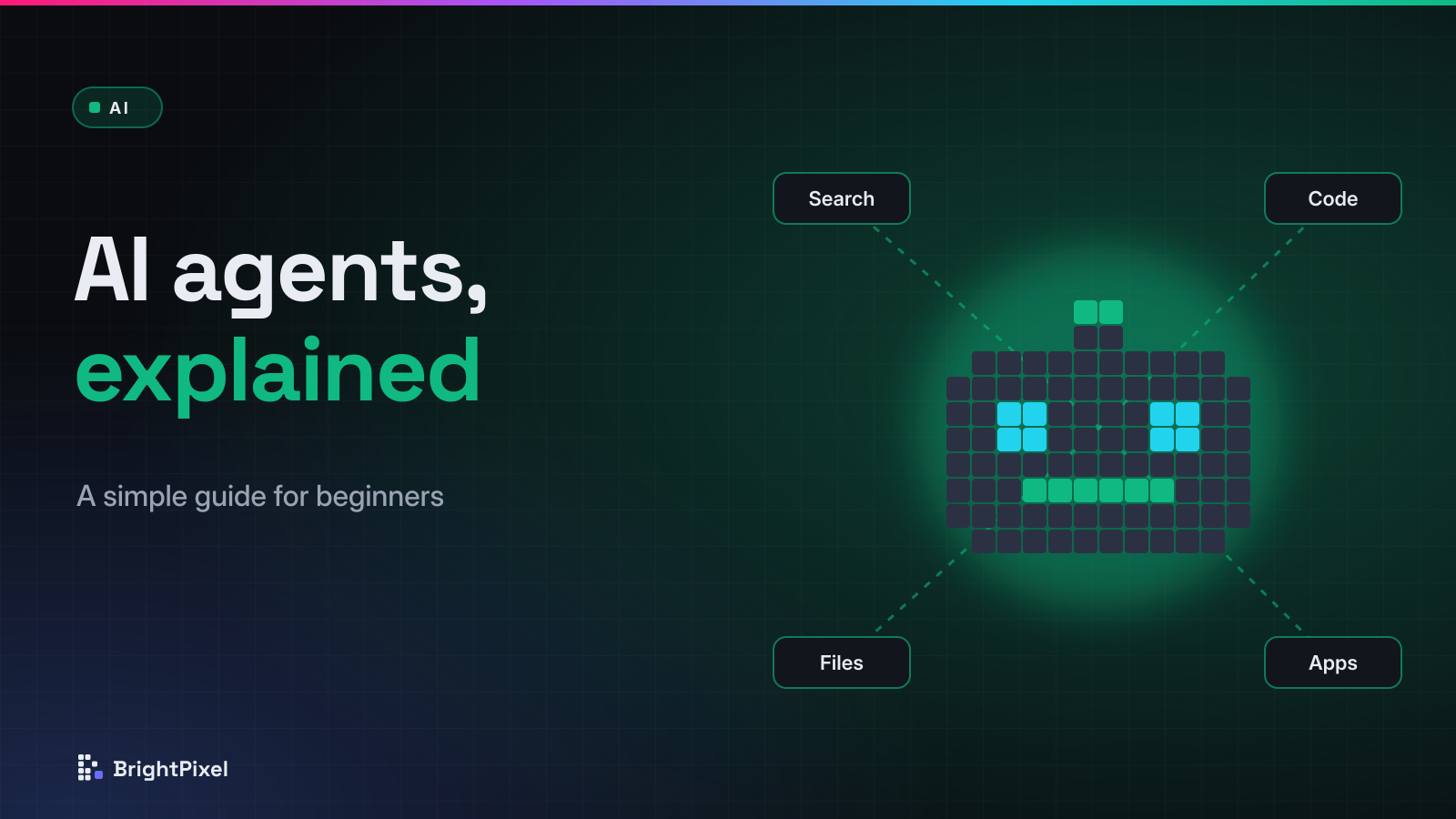
You've probably used an AI chatbot: you ask a question, and it writes an answer. AI agents go one step further. Instead of only replying, they can take actions — searching the web, using apps, writing and running code — to complete a task for you. Here's what that means in plain English.
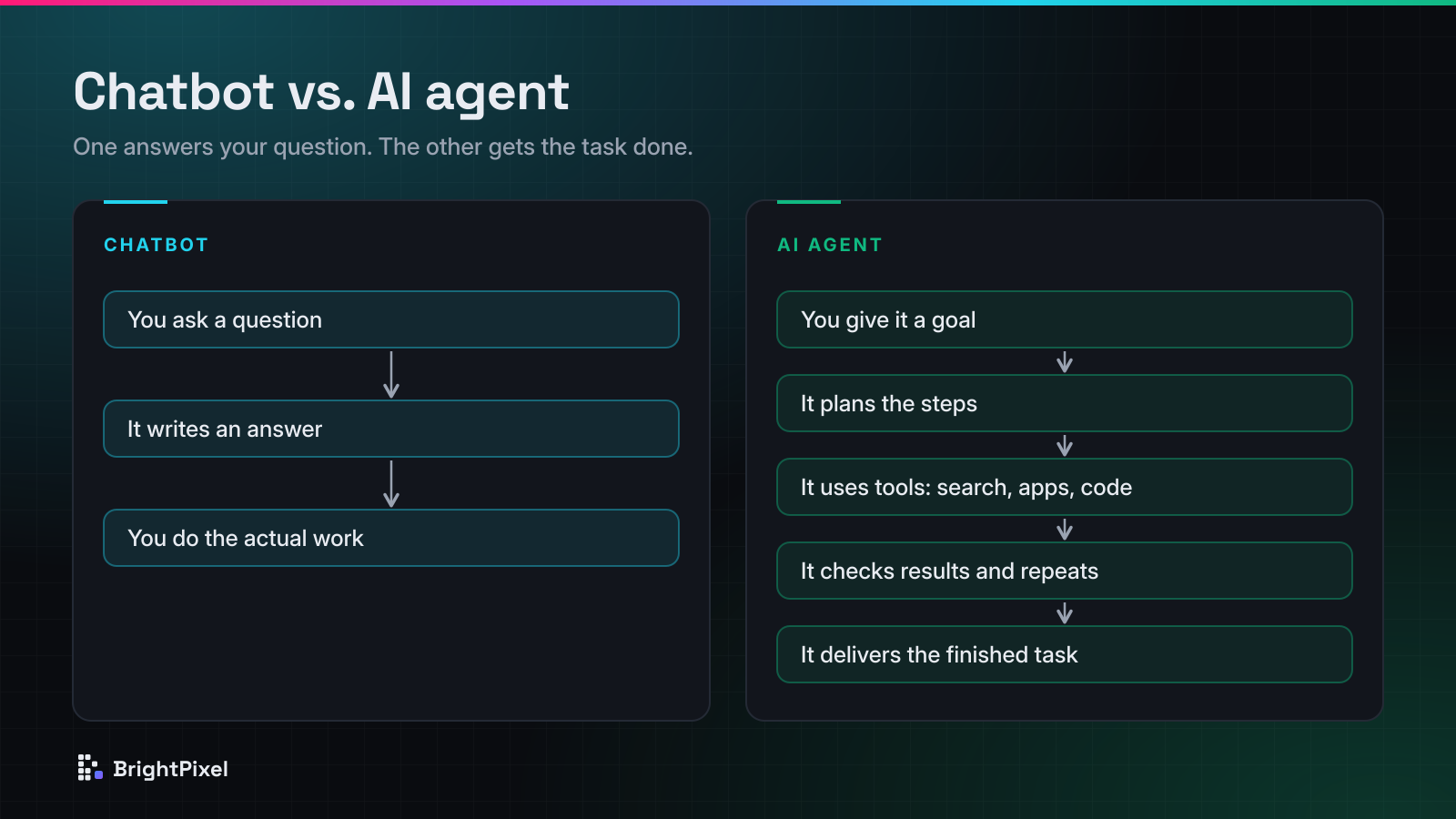
Chatbot vs. AI agent
A simple way to think about the difference:
- A chatbot answers. Ask "What's a good laptop for students?" and it gives you suggestions.
- An agent acts. Ask it to compare prices for three laptops and it can search, collect the results and organise them in a table — working through several steps on its own.
How AI agents work
Most AI agents combine a few building blocks:
- A language model — the "brain" that understands your request and decides what to do next.
- Tools — abilities the agent can use, such as web search, reading files, sending requests to other apps or running code.
- A loop — the agent takes a step, looks at the result, and decides the next step, repeating until the task is done.
- Memory or context — information about the task so far, so it doesn't lose track of what it's doing.
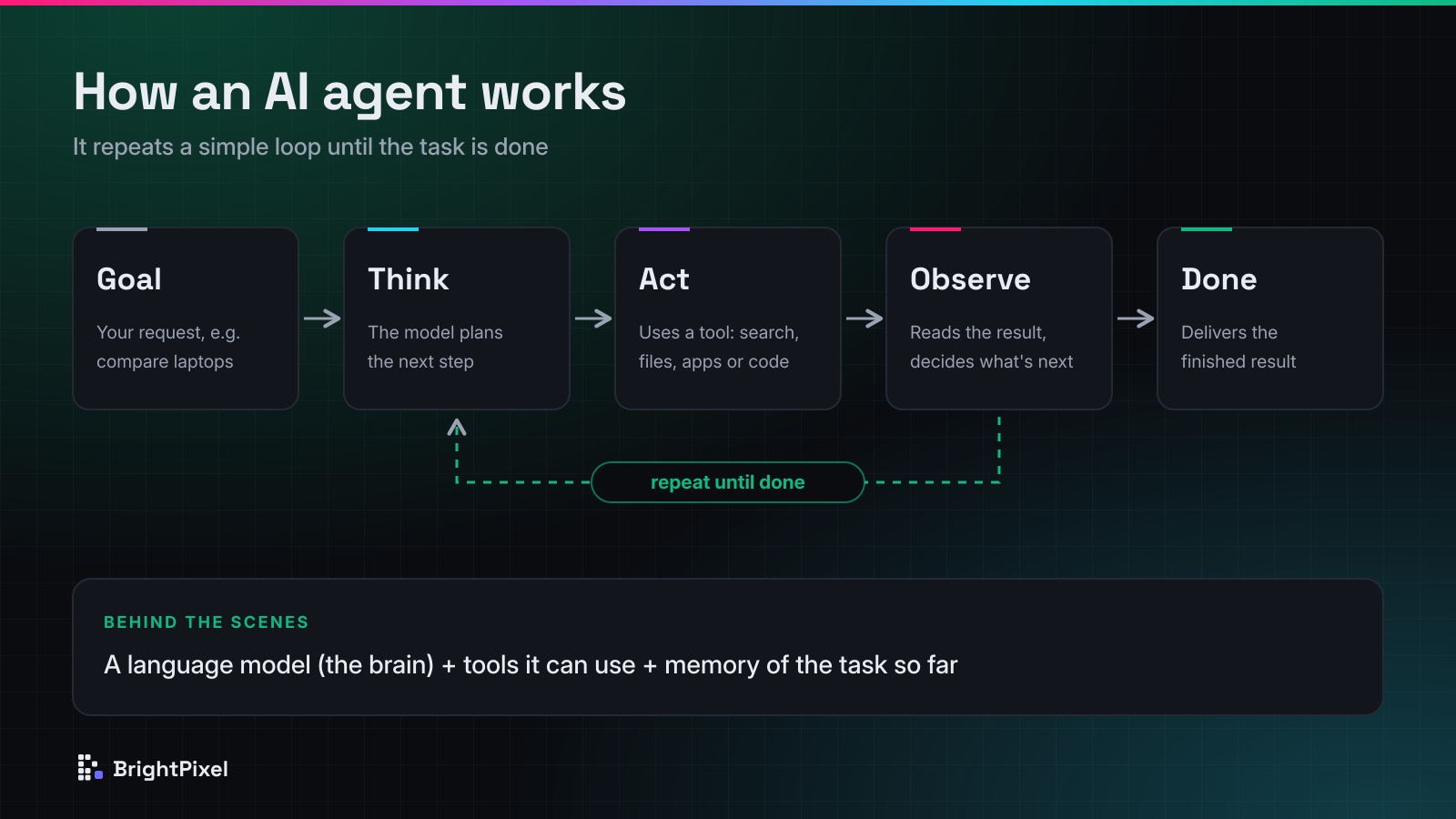
For example, if you ask an agent to "find the three most popular posts on my blog and summarise them," it might fetch your analytics, sort the posts, read each one and then write the summary — deciding each step itself.
What AI agents are used for
- Programming: coding agents can read a project, fix bugs, write features and run tests.
- Research: agents can search many sources and combine the findings into a report.
- Customer support: agents can look up orders and handle common requests.
- Everyday automation: organising files, filling in forms or managing repetitive admin tasks.
The limits you should know
AI agents are powerful, but not perfect:
- They make mistakes. An agent can misunderstand a task or act on wrong information, so check important results.
- Permissions matter. An agent that can send emails or delete files can also do it by accident. Only give it the access it needs.
- Keep a human in the loop. For anything involving money, private data or actions that are hard to undo, review before the agent acts.
Getting started
The easiest way to try an agent is to give it a small, clear task with an obvious result — like organising a folder of notes or researching a simple question — and watch how it works step by step. As you learn what it does well, you can trust it with bigger jobs.
In future posts, we'll look at specific AI tools and how to use them for real-world tasks.
Frequently asked questions
What is an AI agent?
An AI agent is an AI system that doesn't just answer questions but takes actions — like searching the web, using apps or running code — to complete a task, working through several steps on its own.
What is the difference between a chatbot and an AI agent?
A chatbot answers your question. An AI agent plans the steps, uses tools, checks the results and delivers the finished task.
Are AI agents safe to use?
They can make mistakes or act on wrong information. Only give an agent the access it needs, and review anything involving money, private data or actions that are hard to undo.
Sources: Anthropic: Building effective agents, Google Cloud: What are AI agents?, IBM: What are AI agents?. Explanations are in our own words, based on these vendor guides.